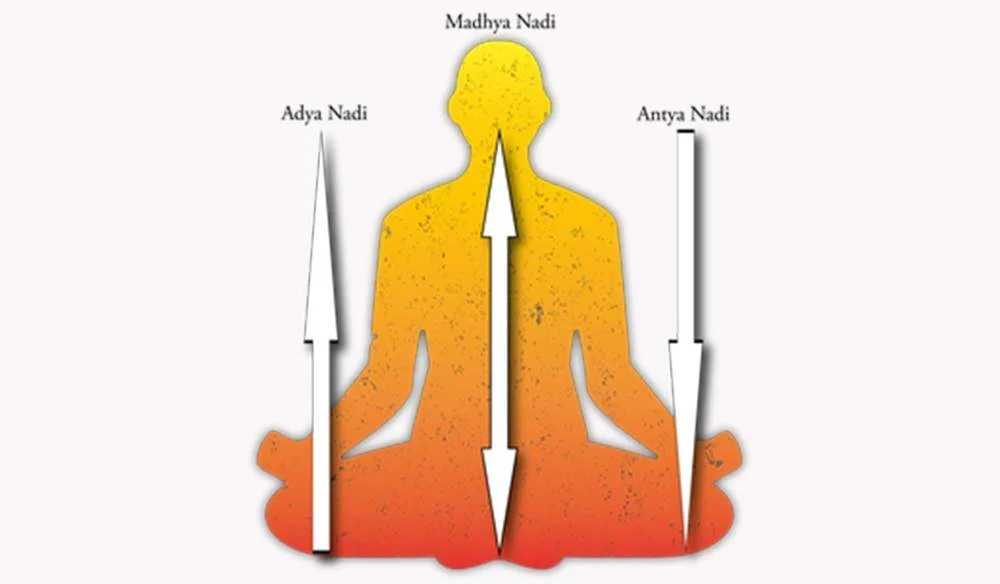
This blog gives you in-depth knowledge on each nadi. In Ayurveda, Nadi refers to the subtle channels or pathways through which the body’s vital energies, including prana (life force), flow. These channels are linked to the physical and physiological aspects of the body, such as blood vessels and nerves, but also represent energetic and subtle flows that maintain health and balance. The concept of Nadi is fundamental in Nadi Pariksha (pulse diagnosis), a key diagnostic tool where Ayurvedic practitioners assess the pulse to determine the state of the three doshas—Vata, Pitta, and Kapha—and overall health status. Nadi reflects the body’s inner balance and helps detect imbalances or diseases early.
In Kundli Milan, Nadi has maximum point that is 8. When the boy and girl have same Nadi it forms the Nadi dosha. Understanding the three types of Nadi—Adi, Madhya, and Antya—is essential for evaluating personality traits, health challenges, and overall marriage compatibility of the couple.
What is Nadi dosha
Nadi Dosha in Vedic astrology occurs when both partners in a marriage share the same type of Nadi—Adi, Madhya, or Antya. Nadi represents the vital energy flow and basic constitution linked to the Ayurvedic doshas (Vata, Pitta, Kapha). Since Nadi carries the highest weight (8 points) in Kundali matching’s Ashtakoot system, having the same Nadi is considered inauspicious. This Dosha is believed to cause health issues, reproductive challenges, emotional disconnect, and marital discord. However, its effects can sometimes be mitigated by other horoscope factors or astrological remedies, so it’s not always fatal but requires careful evaluation by an expert astrologer.
Understand the Adi, Madhya, and Antya Nadi differences
Each Nadi is linked to an Ayurvedic element and carries unique characteristics that influence relationships.
1. Adi (Adya) Nadi (Vata – Air Element)
Element: Air (Vata)
Energy Flow: Bottom to top (feet to head) – represents upward movement of energy.
Personality Traits:
-
Intelligent, creative, and curious.
-
Excellent communication skills and quick-witted.
-
Adaptable but prone to restlessness and anxiety.
Typical Nakshatras:
Ashwini, Ardra, Punarvasu, Uttaraphalguni, Hasta, Jyestha, Mool, Shatabhisha, Purva Bhadrapada.
Marriage Impact:
-
Couples sharing Adi Nadi may face nervous system–related health problems or challenges in reproduction.
Diseases Related to Adi Nadi: Body Pains, asthma, chronic cough, Nervous system problems, digestive problems related to constipation and gas.
Madhya Nadi (Pitta – Fire Element)
Element: Fire (Pitta)
Energy Flow: Bidirectional – represents dynamic transformation.
Personality Traits:
-
Energetic, ambitious, and goal-driven.
-
Perfectionist tendencies; high standards.
-
Strong metabolism and digestive systems.
-
Can be short-tempered or impatient.
Typical Nakshatras:
Bharani, Mrigashira, Pushya, Chitra, Dhanishta.
Marriage Impact:
-
Couples with same Madhya Nadi may struggle with control issues, frequent arguments, and metabolism-related health concerns.
Diseases Related to Madhya Nadi: Acid reflux, ulcers, gastric problems, liver and stomach issues, rashes, ache, hypertension, fever related issues.
Antya Nadi (Kapha – Earth & Water Element)
Element: Earth & Water (Kapha)
Energy Flow: Top to bottom (head to feet) – symbolizes stability and grounding.
Personality Traits:
-
Calm, patient, and nurturing.
-
Emotionally stable, reliable, and thoughtful.
-
Often spiritual and introspective, but can be reserved.
Typical Nakshatras:
Linked to grounding and calm energies.
Marriage Impact:
-
Shared Antya Nadi may lead to emotional detachment, stagnation in the relationship, or health issues such as lethargy or weight problems.
Diseases Related to Antya Nadi: Allergies, bronchitis, sinusitis, chronic cough, arthritis, obesity, miscarriage, delay in conceiving.
Summary Table of Core Differences
| Nadi Type | Ayurvedic Element | Main Traits | Energy Flow | Challenges (when matched) |
|---|---|---|---|---|
| Adi | Air (Vata) | Intelligent, creative, curious | Bottom → Top | Anxiety, nervous system problems, fertility issues |
| Madhya | Fire (Pitta) | Ambitious, perfectionist, energetic | Bidirectional | Dominance battles, digestive/metabolic issues |
| Antya | Earth & Water (Kapha) | Calm, patient, nurturing | Top → Bottom | Emotional reserve, stagnation, weight issues |
Conclusion
The differences between Adi, Madhya, and Antya Nadi lie in their associated Ayurvedic elements, energy flow, and influence on personalities and relationships.
-
Adi Nadi: Mentally agile and creative.
-
Madhya Nadi: Fiery, ambitious, and strong-willed.
-
Antya Nadi: Grounded, patient, and emotionally stable.
In marriage compatibility, sharing the same Nadi is believed to cause Nadi Dosha, which may impact harmony and health. Awareness of these traits helps partners make informed and balanced decisions.
What to do if you have Nadi Dosha?
When there is Nadi dosha in your marriage matching, it is important to check if Nadi dosha is getting cancelled to proceed further with marriage. You need to check for Nadi Paad Vedha. By checking the Nadi in detail we can see if the Nadi dosha is getting cancelled or not. Will the Nadi dosha have a bad effect on your married life.

Astrologer Navneet Khanna, is a former World Bank & SIDA consultant, he has held many prestigious projects in India and Africa before settling down in his native place, near Chandigarh and following his passion in Vedic Astrology. Navneet is very scientific and logical in his Predictions. He reasons his predictions because of which he has a worldwide following and people from many countries solve their problems with his help.
He is an expert in Marriage and Love Relationship. In Marriage Matching he does analysis of Guna Milan and also Grah Milan (Matching of the Planets) and will tell you effects and remedies of Nadi Dosha, Bhakoot Dosha & Gana Dosha if present.
He is an Expert Astrologer on Many Indian & Foreign Websites like myastrologysigns.com and a frequent writer for many national and international websites and magazines.
Navneet believes that Vedic Astrology is a vast subject, it is an ocean of knowledge and wisdom. It is simply up to the individual to jump into the ocean and extract the pearls. With his vast experience on occult subjects he has been associated with leading astrologers in India to promote astrology.
Navneet Khanna believes that the energy and inspiration behind him is the Blessings of the Almighty.
You may call / whatsapp him on his number +91-9417884861 .


